
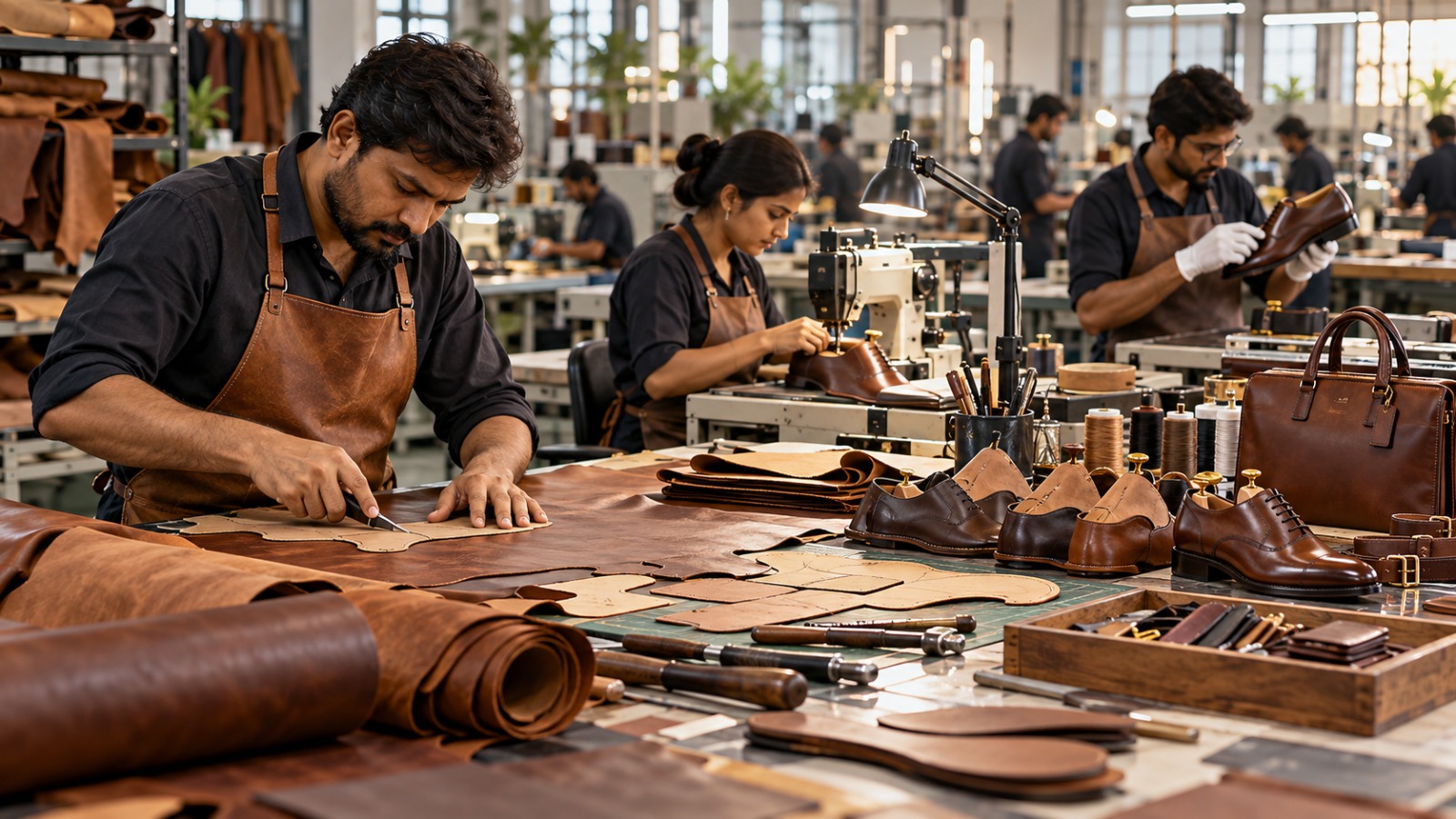
India has long been recognised for its craftsmanship in leather and footwear. Today, that heritage is being supported by modern manufacturing capabilities, a broad supplier ecosystem and increasing access to international markets—making India an increasingly important sourcing destination for global brands and retailers.
In FY 2025–26, India’s leather and footwear exports reached approximately US$4.75 billion, with value-added footwear and leather goods playing an important role in the sector’s export performance. Press Information Bureau
But India’s growing relevance is about more than export numbers. For international buyers, the country offers a combination of craftsmanship, product diversity, manufacturing experience and sourcing capabilities across leather footwear, leather goods, accessories and apparel.
A Strong Manufacturing Ecosystem
India has established manufacturing clusters across cities including Agra, Kanpur, Chennai, Ranipet, Ambur and Kolkata. These regions bring together manufacturers, skilled workers, component suppliers, tanneries and supporting industries that have developed expertise over decades.
This ecosystem allows buyers to source across a wide range of categories—from formal and casual footwear to leather bags, belts, wallets, garments and fashion accessories.
The presence of specialised suppliers also makes it possible to manage different stages of production within a connected manufacturing network, from raw material development and sampling to production and finishing.
Craftsmanship Meets Modern Production
One of India’s greatest strengths remains its skilled workforce.
Traditional knowledge of leather craftsmanship continues to play an important role, particularly in areas such as cutting, stitching, finishing and shoe construction. At the same time, manufacturers are adopting modern machinery, quality-control systems and product-development processes to meet the requirements of international markets.
For global buyers, this combination creates an opportunity to develop products that retain the character and detailing of skilled craftsmanship while benefiting from organised production capabilities.
More Than Just Manufacturing
Modern sourcing requires much more than finding a factory.
Brands increasingly need partners who can support them through product development, material sourcing, sampling, costing, production management, quality control and shipment coordination.
This is where experienced buying houses and sourcing partners can add significant value. By acting as a bridge between international buyers and manufacturers, they help simplify communication, monitor production and maintain consistency throughout the sourcing process.
A strong sourcing partner can therefore turn a complex network of suppliers and production stages into a more coordinated process.
A Broad Product Base
Another advantage of sourcing from India is the diversity of products available within the leather and footwear ecosystem.
Buyers can explore categories including:
- Leather footwear and footwear components
- Leather garments
- Bags and travel goods
- Belts and wallets
- Fashion accessories
- Finished leather
- Textile and leather-based lifestyle products
This breadth gives brands greater flexibility when developing collections and can allow multiple related categories to be sourced through the same market.
Expanding Access to Global Markets
Trade developments are also creating new opportunities for Indian exporters.
The Government of India has identified leather and footwear as an important labour-intensive export sector and has called for greater focus on quality, design, branding, sustainability, scale and market diversification. In July 2026, the Commerce and Industry Minister called for the sector to work toward at least US$15 billion in exports over the next five to six years. Press Information Bureau
New trade agreements are also improving market access. For example, recent agreements provide duty advantages for several Indian leather and footwear categories in international markets, creating additional opportunities for manufacturers and exporters.
Quality and Compliance Are Becoming Even More Important
As opportunities grow, so do buyer expectations.
Competitive pricing alone is no longer enough. International buyers increasingly evaluate suppliers on product consistency, material quality, development capability, production transparency, compliance and the ability to deliver reliably.
India’s footwear manufacturing ecosystem is also continuing to evolve around formal quality standards. In 2026, amendments were introduced to footwear Quality Control Orders with the aim of supporting domestic manufacturing while improving ease of doing business.
For sourcing partners and manufacturers, the opportunity therefore lies not simply in producing more—but in producing better.
Looking Ahead
India’s leather and footwear industry stands at an interesting point where heritage craftsmanship, manufacturing capability and global opportunity are coming together.
For international brands looking to diversify their sourcing network, develop value-added products or build long-term manufacturing relationships, India offers an ecosystem capable of supporting everything from product development to final production.
At Wasans, our experience across leather, footwear, sourcing, manufacturing and international trade has been built over generations. As the industry continues to evolve, we remain focused on what has always mattered most: understanding the product, maintaining quality and building lasting relationships with our partners.
From craftsmanship to global sourcing, India’s next chapter in leather and footwear is already taking shape.